
Knocked-Out Tooth: What to Do in the First Hour
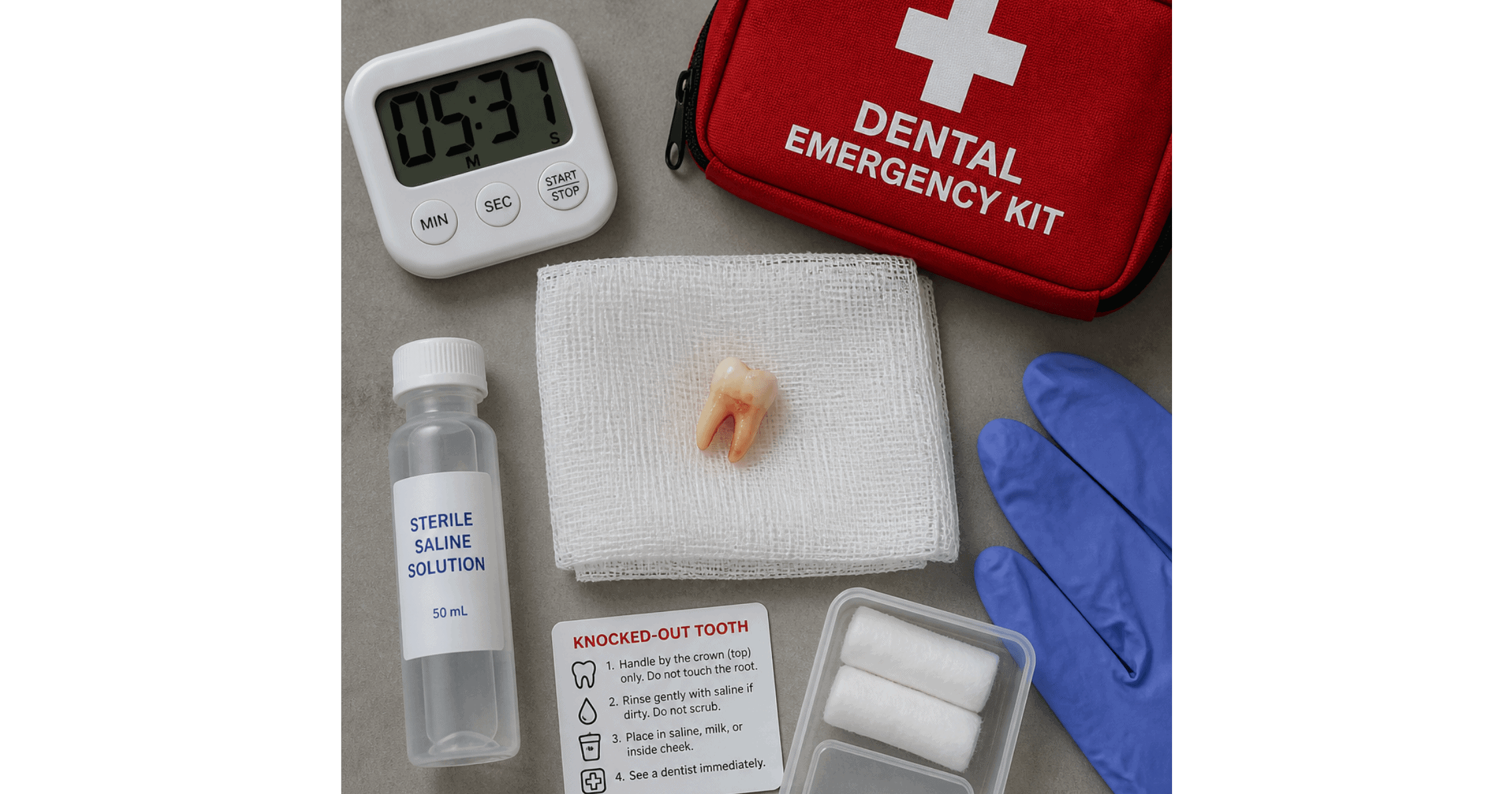
Most dental problems can wait a day or two. A knocked-out tooth cannot. Once a permanent tooth leaves its socket, a countdown begins — and what you do in those first minutes determines whether the tooth can be saved at all.
The good news is that the right steps are simple. You don’t need special equipment. You need to know what they are before it happens.
Baby Tooth or Adult Tooth — This Matters First
If a baby tooth comes out, do not attempt to reinsert it. Putting it back risks damaging the adult tooth developing underneath. Keep the child calm, control any bleeding with clean gauze, and call your Gordon dentist.
Everything below applies only to permanent teeth.
What to Do When a Permanent Tooth Is Knocked Out
1. Pick It Up by the Crown
Handle only the white part of the tooth — the crown. The root contains periodontal ligament cells that are essential for reimplantation. Any contact with the root, even well-intentioned cleaning, can destroy those cells immediately.
2. Rinse Without Scrubbing
If the tooth has visible dirt on it, rinse briefly under cold water or milk. No soap. No cloth. No drying. Just a quick rinse and move on.
3. Try to Reinsert It
The best place for the tooth is back in its socket. If the person is alert and not at risk of swallowing it, gently reposition the tooth and bite down softly on clean gauze to hold it in place.
If reinsertion isn’t possible, go straight to step 4.
4. Keep It Moist
A dry tooth deteriorates quickly. Storage options in order of preference:
- Milk — the most practical choice; its composition helps preserve root cells
- Between the cheek and gum — adults only, not children
- Saline solution — if available
Avoid tap water. It causes root cells to swell and break down within minutes.
5. Call and Get to a Dentist Immediately
Phone ahead so the practice is ready for you. The 60-minute window is the most commonly cited guideline, though outcomes are often better within the first 30 minutes. Don’t wait to see whether pain develops. There may be none, and it’s still a dental emergency.
What Not to Do
These are the mistakes that reduce the chance of saving a tooth:
- Touching or scrubbing the root
- Storing the tooth in tap water
- Wrapping it in a tissue or cloth — it dries out immediately
- Waiting until the next day, reimplantation becomes very unlikely
- Assuming it’s fine because there’s no pain
What Happens at the Dental Chair
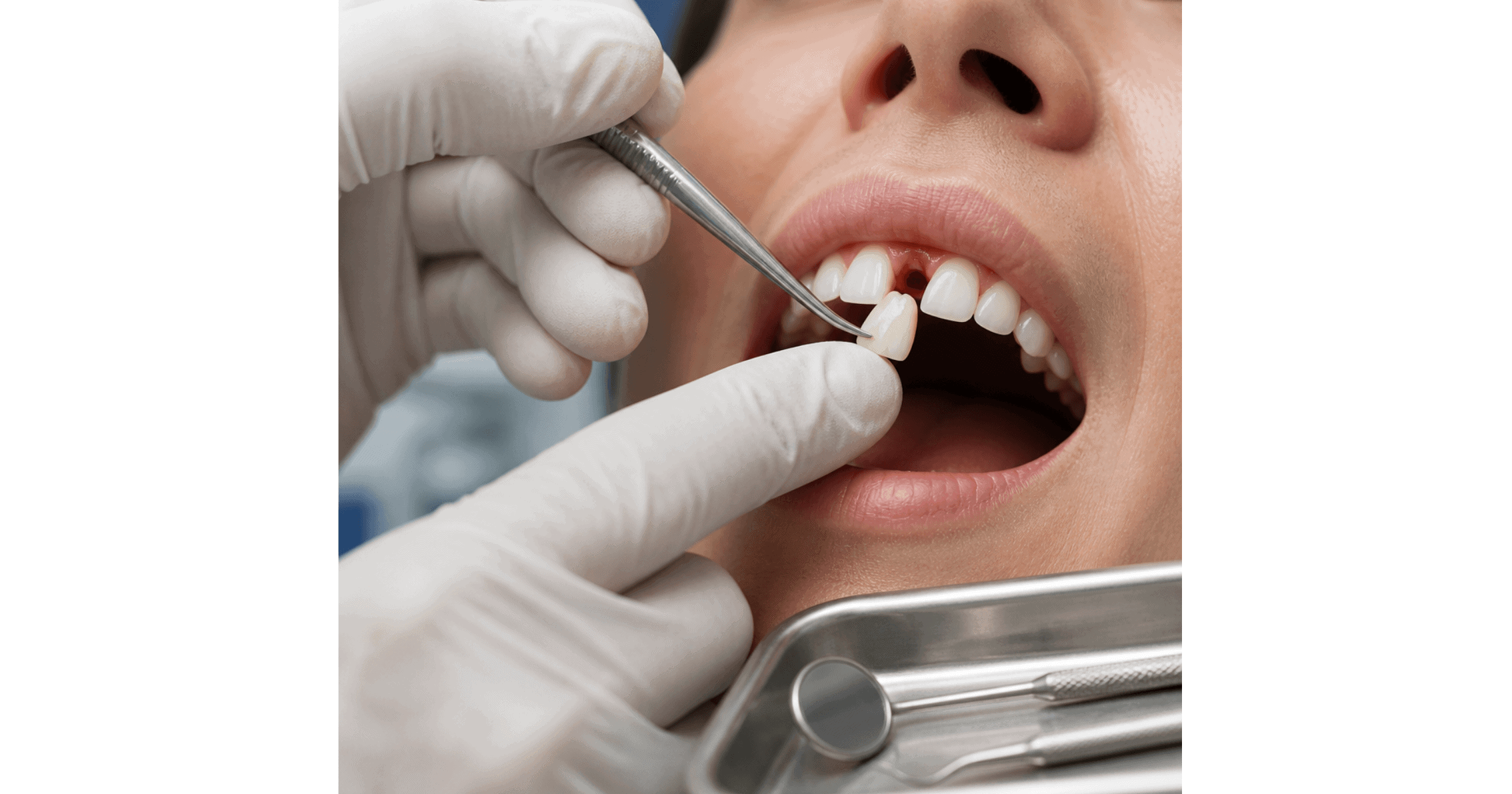
Your Gordon dentist will assess the tooth, the socket, and the surrounding area. If reimplantation is viable, the tooth is carefully repositioned and splinted to adjacent teeth while the tissue heals. Depending on how the tooth responds, a follow-up or root canal treatment may be needed.
Not every tooth can be saved — the outcome depends on how long it was out, how it was stored, and the condition of the root. Acting within that first hour gives it the best possible chance.
Other Injuries to Check For
A knocked-out tooth often comes with company. After the same impact, also look for:
- Cracked or chipped teeth — not always visible but still in need of attention
- Loosened teeth — a mobile tooth that hasn’t come out still requires prompt care
- Cuts to the lips, gums, or tongue — apply gentle pressure with clean gauze
- Jaw pain or limited mouth opening — may indicate a jaw injury requiring further assessment
If there’s a head injury — confusion, loss of consciousness, or vomiting — seek emergency medical care first.
Mouthguards Reduce the Risk
Custom-fitted mouthguards are among the most effective ways to protect teeth during contact sports or any activity with a risk of facial impact. Over-the-counter options offer some coverage, but a professionally fitted mouthguard provides better protection and a more secure fit.
At Northern Dental Gordon, we offer custom mouthguards for adults and children. If you or your child plays sport, it’s worth asking about this at your next visit.
Frequently Asked Questions
Can a knocked-out tooth be saved?
It depends on how quickly you act and how the tooth is handled. A permanent tooth that is kept moist and reaches a dentist within 60 minutes has a reasonable chance of being reimplanted. The sooner you get there, the better the outlook.
What is the ideal liquid to keep a knocked-out tooth in?
Milk is the most practical option and widely recommended. It helps preserve the root cells until you reach the dentist. Saline solution works too. Tap water should be avoided — it quickly damages root cells.
Should I try to put the tooth back in myself?
Yes, if it’s a permanent tooth and the person is conscious and not at risk of swallowing it. Gently reinsert it into the socket and bite down on clean gauze to hold it in place. Do not force it. Store it in milk and visit your Gordon dentist right away if it doesn’t go back in smoothly.
Is a knocked-out tooth always a dental emergency?
Yes. Even if there’s no pain, a knocked-out permanent tooth requires immediate dental attention. In this case, pain is not a good measure of severity.
What if it’s after hours?
Call the practice first — you may be able to reach someone for guidance. If not, go to your nearest hospital emergency department. Time still matters.
Knocked-Out Tooth in Gordon
If a tooth has been knocked out, don’t wait. Call us on (02) 9498 8290, and we’ll guide you through the next steps while you make your way in. Same-day emergency appointments are available.
You can also book online. We’re at Suite 3, 2 St Johns Ave in Gordon, and we see patients from Gordon, Pymble, Killara, St Ives, and Turramurra.