
How Invisalign Straightens Teeth — and What to Expect

Invisalign has become one of the most common orthodontic options for adults and teenagers — but most patients start treatment knowing little more than that it involves clear trays.
Understanding how it actually works, and what each stage of treatment involves, makes the process easier to navigate and the outcome easier to achieve.
How Invisalign Works
Instead of brackets and wires, it works by gently moving your teeth into place with a series of clear, custom-made aligners. Each aligner is slightly different from the one before it — shaped to represent a small, incremental step toward the final tooth position.
Wearing each aligner applies gentle, controlled pressure to specific teeth, moving them gradually in the direction planned at the outset of treatment.
Before switching to the next aligner in the series, each aligner is worn for one to two weeks. Over the course of treatment, the teeth move progressively through each planned position until they reach their final alignment.
The aligners are fabricated from a smooth thermoplastic material and custom-manufactured to fit the dentition accurately.
The fit is what generates the pressure needed for movement — which is why wearing them for the recommended 20 to 22 hours per day is essential. Reduced wear time slows progress and can affect the outcome.
What Invisalign Can Treat
Invisalign is effective across a wider range of cases than many patients expect. Conditions it commonly addresses include:
- Crowded teeth — where there isn’t enough space for teeth to sit in correct alignment
- Spacing and gaps — caused by missing teeth, small teeth, or jaw size discrepancy
- Overbite — upper front teeth sit too far over the lower front teeth when biting together.
- Underbite — lower teeth are positioned ahead of the upper teeth.
- Crossbite — lower teeth contain one or more upper teeth.
- Open bite — when you close your mouth, some of the upper and lower teeth don’t touch.
Complex bite corrections and significant tooth movements can sometimes be achieved with Invisalign, particularly when combined with attachments — small tooth-coloured bumps bonded to specific teeth that help the aligner grip and move them more precisely.
Not every case is suitable, and your dentist will assess whether Invisalign can achieve the outcome you’re looking for before recommending it.
The Invisalign Process at Northern Dental Gordon
Initial consultation and assessment
The process begins with a comprehensive assessment — photographs, X-rays, and a digital scan of the teeth and jaw. No physical impressions are required.
The digital scan captures an accurate 3D model of the teeth, which is used to plan the entire treatment digitally before a single aligner is made.
Treatment planning
Using the scan data, the treatment plan is mapped out digitally using Invisalign’s software. This simulates how the teeth will move at each stage of treatment — from the current position to the planned final result.
You can view a projected treatment outcome before deciding whether to proceed. Once the plan is approved, the aligners are custom manufactured and sent to the practice.
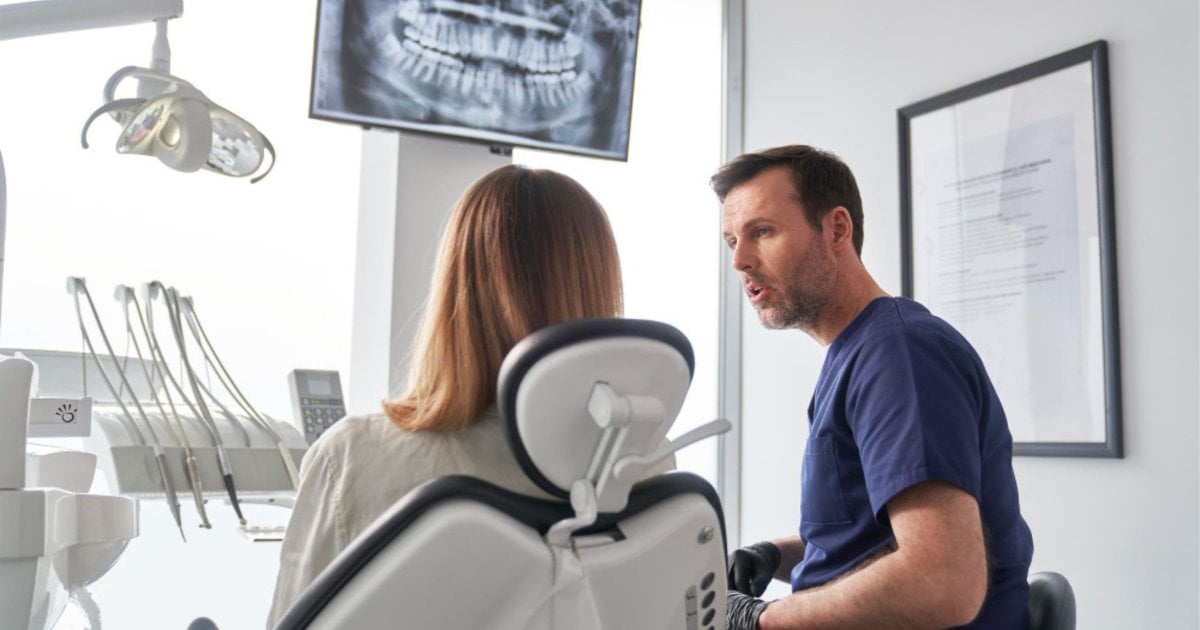
Fitting and attachments
At the fitting appointment, any attachments needed are bonded to the teeth, and the first set of aligners is fitted. Your Gordon dentist will check the fit, demonstrate how to insert and remove them, and go through care instructions. The aligners should feel snug but not painful — some pressure is expected, particularly with each new set.
Wearing the aligners
The most important part of treatment is wearing the aligners consistently. They should be in for 20 to 22 hours per day — removed only for eating, drinking anything other than water, brushing, and flossing.
Each aligner is worn for the prescribed period before moving to the next, usually at home rather than during a clinic appointment.
Progress appointments
Regular dental check-ups — typically every six to eight weeks — allow your dentist to monitor tooth movement, assess how the case is tracking against the plan, and address any issues. If teeth aren’t moving as expected, refinements can be made. Additional aligners can be ordered to fine-tune the result before treatment concludes.
Refinements
It’s common for treatment to require a refinement stage — a second series of aligners to complete movements that didn’t fully resolve with the initial series. This isn’t a sign that something went wrong; it’s a standard part of how Invisalign treatment is managed and is factored into the treatment plan from the outset at most practices.
Retention
Once the final aligner is completed, retainers are fitted. Retainers hold the teeth in their new positions while the surrounding bone stabilises — without them, teeth tend to shift back.
Most patients wear retainers full-time initially and transition to night-time wear over several months. Long-term night-time wear is recommended indefinitely to maintain results.
What to Expect Day to Day
Discomfort
Some pressure and tenderness with each new aligner are normal — they indicate the teeth are moving. This typically eases within a day or two of switching to a new set. It’s distinct from pain, and most patients manage it without any pain relief.
Speech
A mild lisp is common in the first few days of wearing aligners. Most patients adapt within a week and speak normally while wearing them.
Eating and drinking
Take your aligners out before eating or drinking anything except plain water. Eating with aligners increases the risk of staining the plastic and damaging the fit. Rinsing the aligners and brushing before reinserting them after meals keeps them clean and odour-free.
Cleaning
Aligners should be rinsed with water when removed and cleaned daily — gently with a soft toothbrush and mild soap. Toothpaste can be too abrasive and may scratch your aligners.
Treatment length
Treatment length varies by case. Minor corrections can be completed in six to twelve months. More complex cases typically take twelve to twenty-four months. Your Gordon dentist will give a realistic estimate based on the plan.
Frequently Asked Questions
Can I eat normally with Invisalign?
Yes — aligners are removed for all meals and snacks. Unlike fixed braces, which require avoiding hard and sticky foods, Invisalign has no dietary restrictions. The trade-off is the discipline required to remove and reinsert aligners consistently throughout the day.
What happens if an aligner is broken or lost?
Contact the practice promptly. In most cases, moving to the next aligner in the series or returning to the previous one temporarily is the solution while a replacement is ordered. Keeping the previous set of aligners as a backup is a good habit.
Can teenagers use Invisalign?
Yes. Invisalign Teen are created particularly for younger patients and has compliance markers – small blue dots that fade as they go on wearing braces – to keep track of consistent brace use. Replacement aligners are included in the event of loss.
How do attachments affect the appearance of Invisalign?
Attachments are tooth-coloured and small. They’re visible on close inspection but not prominent from a conversational distance. They’re removed at the end of treatment, leaving no permanent mark on the tooth surface.
What happens if my teeth move after treatment?
Some movement after orthodontic treatment is normal if retention isn’t maintained. Wearing retainers as directed — particularly in the first year — is the most reliable way to preserve the result. If movement does occur, a short refinement course may be an option, depending on the extent of the shift.
Invisalign in Gordon
If you’d like to find out whether Invisalign is the right option for your teeth, the next step is a consultation.
At Northern Dental Gordon, we see patients from Gordon, Pymble, Killara, St Ives, and Turramurra.
Call us on (02) 9498 8290 or book online. We’re at Suite 3, 2 St Johns Ave in Gordon.