
Dental Bridges in Gordon: Types, Cost Factors and How They Work
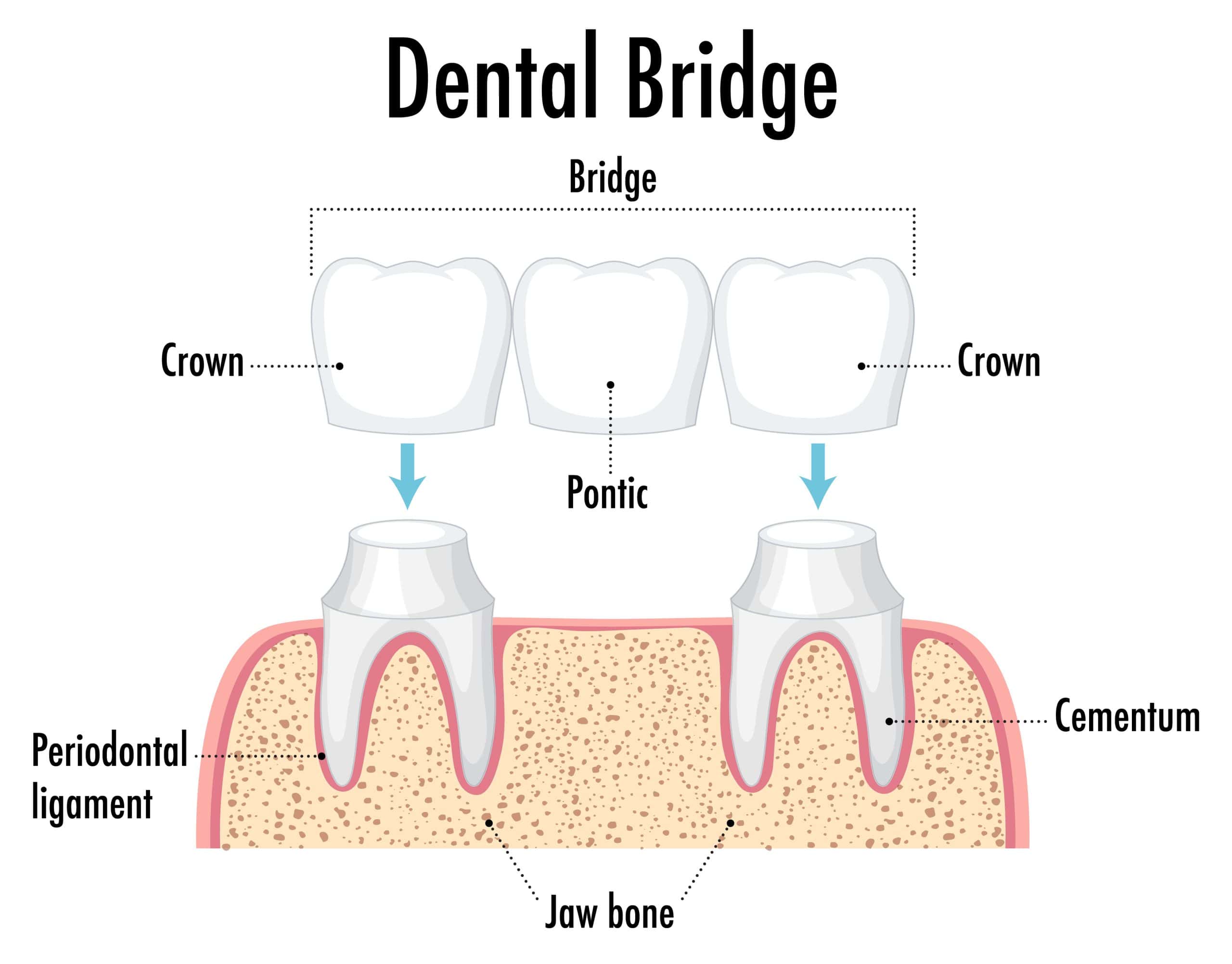
Missing teeth don’t just affect your smile—they can make eating and speaking harder. A dental bridge fills these spaces, bringing back both function and a natural look.
Unlike removable dentures, a dental bridge is anchored securely to surrounding teeth or implants, providing stability for everyday eating and speaking.
What Is a Dental Bridge?
A dental bridge is an artificial appliance used to fill the space left by missing teeth. Typically, it consists of two or more crowns on either side of the gap (called abutment teeth) with one or more artificial teeth (pontics) in between.
A dental bridge may be anchored to surrounding teeth, implants, or a combination of the two, depending on your individual needs. By filling the gap, it supports better chewing, helps preserve facial shape, and reduces the risk of neighbouring teeth shifting.
They also contribute to clearer speech and overall oral comfort, making them a practical option for many patients.
Types of Dental Bridges
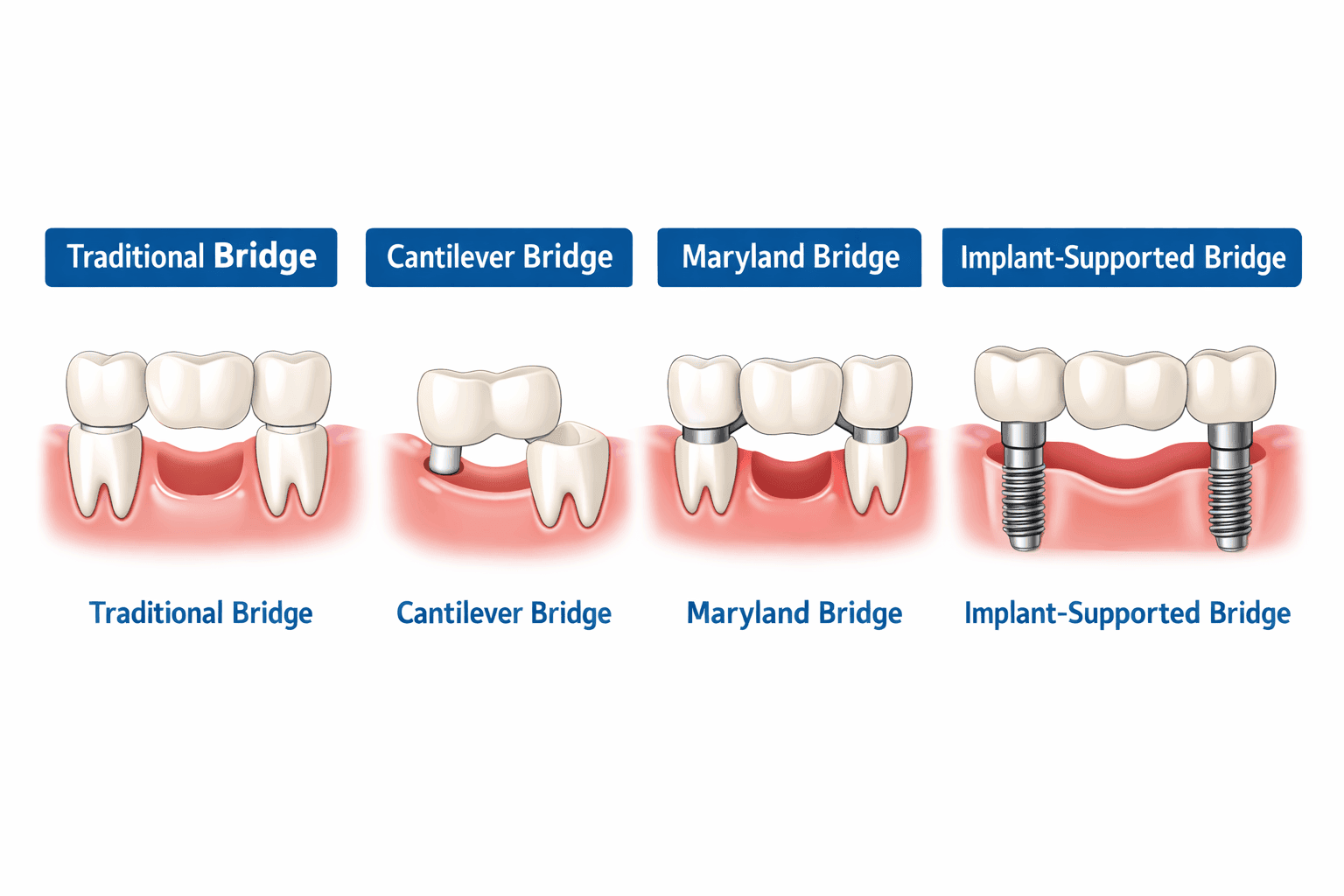
Choosing the right type of bridge depends on your dental structure, the location of the missing teeth, and your long-term goals. Here are the main types:
Traditional Dental Bridges
Traditional bridges are the most common type. This type of bridge uses crowns on the teeth on either side of the gap, with an artificial tooth in between. Suitable for gaps with healthy adjacent teeth, this option provides strong support and durability.
Traditional bridges are often recommended for back teeth where chewing forces are higher.
Cantilever Bridges
A cantilever bridge works like a traditional bridge but is supported by only one neighbouring tooth. They are less common and generally used for areas with lower biting pressure, such as the front teeth.
While effective, they are not ideal for multiple missing teeth or areas under heavy stress.
Maryland (Resin-Bonded) Bridges
Maryland bridges are a more conservative option, particularly for missing front teeth. A thin metal or porcelain framework is attached to the back of the adjacent teeth to hold the replacement tooth in place.
This requires minimal alteration to the adjacent teeth, making it a popular choice for patients looking to preserve natural tooth structure. However, they may be less durable in high-stress areas, such as molars.
Implant-Supported Bridges
Implant-supported bridges are secured to dental implants instead of relying on natural teeth for support. They are ideal when multiple teeth are missing and provide excellent stability and longevity. Because implants support them, they also help maintain jawbone density, which can prevent bone loss over time.
Although the procedure is more involved and takes longer, implant-supported bridges offer one of the most durable and long-lasting solutions for missing teeth.
The Dental Bridge Procedure
Getting a bridge placed usually requires a few visits over time. Here’s what you can expect:
- Consultation and Assessment – During your consultation, the dentist evaluates your teeth, takes X-rays, and discusses suitable solutions based on the position of the missing tooth and your overall dental health.
- Preparing Abutment Teeth – For traditional and cantilever bridges, the adjacent teeth are shaped to fit crowns. This step ensures the bridge will sit securely and comfortably.
- Impressions – Custom impressions are created from your teeth to ensure the bridge matches your mouth precisely. Accurate impressions are key for a proper fit and natural appearance.
- Temporary Bridge – A temporary bridge protects the prepared teeth and maintains function while the permanent bridge is being made.
- Fitting the Permanent Bridge – Your dentist ensures proper fit, bite alignment, and appearance before permanently cementing the bridge.
Most patients require 2–3 visits over a few weeks to complete the process, depending on the type of bridge chosen and the complexity of the case.
Dental Bridge vs Implant: Which Is Right for You?
Knowing how dental bridges and implants differ can help you choose the option that’s right for you.
| Feature | Dental Bridge | Dental Implant |
| Invasiveness | Minimal (except implant-supported) | Surgical procedure |
| Timeline | Weeks | Several months |
| Longevity | 5–15 years | 15+ years |
| Cost Factors | Number of units, materials, complexity | Implant type, surgery, restoration |
| Bone Preservation | Limited | Preserves jawbone |
| Suitability | Healthy adjacent teeth | Sufficient bone and gum health |
While both options restore function and appearance, your dentist in Gordon can help you decide which solution best suits your smile, lifestyle, and oral health.
Caring for Your Dental Bridge
With good care, a dental bridge can remain in place for many years. Maintaining proper oral hygiene helps protect both the bridge and your surrounding teeth.
- Flossing – Use floss threaders or superfloss to clean under the pontic and between abutment teeth. This prevents plaque buildup and decay.
- Regular Dental Check-Ups – Routine dental visits help identify potential problems early and ensure your bridge remains secure.
- Avoid Hard or Sticky Foods – Eating hard foods can put stress on your bridge, and sticky foods may loosen it. Moderation helps maintain its longevity.
- Mouthguards – If you play sports, a custom mouthguard protects both your bridge and natural teeth from impact.
Proper care not only extends the life of your bridge but also preserves the health of your remaining teeth and gums.
Bridge Cost Factors
The cost of getting a dental bridge depends on several key factors:
- Number of Units – Larger gaps require more pontics, increasing the overall complexity.
- Material Choice – Porcelain, ceramic, or metal-ceramic bridges vary in durability, appearance, and fabrication requirements.
- Complexity – Bridges needing extensive preparation, special design considerations, or implant support can influence cost.
- Health Fund Coverage – Some dental funds provide partial coverage for bridges. Checking your plan can help manage out-of-pocket expenses.
Discussing these factors with your dentist in Gordon ensures you understand the process and can plan your treatment effectively.
Frequently Asked Questions
How long do dental bridges last?
When properly cared for, a dental bridge can last 5 to 15 years. Some bridges may last even longer with regular check-ups.
Can a bridge fall out?
If the supporting teeth weaken or the cement holding the bridge fails, it may become loose. Routine dental visits help detect issues before they compromise the bridge.
Is a bridge better than a denture?
Bridges are fixed and more stable than removable dentures. They offer better chewing efficiency, clearer speech, and greater comfort.
What happens to teeth under the bridge?
Abutment teeth are shaped to fit crowns, which support the bridge. Maintaining oral hygiene around these teeth is essential to prevent decay or gum problems.
Dental Bridges in Gordon
If you have gaps from missing teeth, a dental bridge can restore both function and the appearance of your smile. Our team Northern Dental Gordon provides patient-focused care and guidance to help you understand all your options.
We provide dental bridge solutions for residents in surrounding suburbs, including Pymble, Killara, Lindfield, and St Ives.
Call us today at (02) 9498 8290 or book online to schedule a consultation. Visit us at Suite 3, 2 St Johns Ave in Gordon, and let us guide you through every step of your dental bridge journey.