
How to Stop Sensitive Teeth: Causes, Remedies and When to Get Help

You reach for your morning coffee, take a sip, and wince. Or you bite into something cold and feel that sharp, sudden sting shoot through your tooth. If that sounds familiar, you’re not alone — tooth sensitivity affects a large number of adults, and most just put up with it.
But avoiding hot drinks, cold food, and chilly air shouldn’t be something you have to plan around. Sensitive teeth are your mouth’s way of telling you something has changed — and in most cases, once you know what’s causing it, it can be treated.
What Causes Sensitive Teeth?
Tooth sensitivity happens when dentine — the inner layer of your tooth — becomes exposed. Dentine contains thousands of tiny tubules that lead directly to the nerve in the centre of the tooth. When external triggers like temperature, pressure, or certain foods reach those tubules, they irritate the nerve, causing that familiar sharp pain.
Several things can lead to exposed dentine:
- Worn enamel — Enamel is the hard outer shell of your tooth. Once it wears away, it doesn’t grow back, leaving the dentine underneath vulnerable to everyday triggers.
- Gum recession — As gums pull away from the tooth, they expose the root surface. Root dentine lacks an enamel layer, so it’s particularly sensitive.
- Tooth cracks — Even hairline cracks can expose dentine and cause sensitivity, particularly when biting.
- Decay — A cavity creates a direct pathway to the inner layers of the tooth, which is why decayed teeth are often highly sensitive.
- Grinding (bruxism) — Clenching and grinding at night gradually wears down enamel, leading to sensitivity that worsens over time.
- Acid erosion — Frequent exposure to acidic food, drinks, or stomach acid slowly dissolves enamel from the outside in.
- Recent dental work — Temporary sensitivity after dental fillings, crowns, or teeth-whitening treatment is normal and usually resolves within a few weeks.
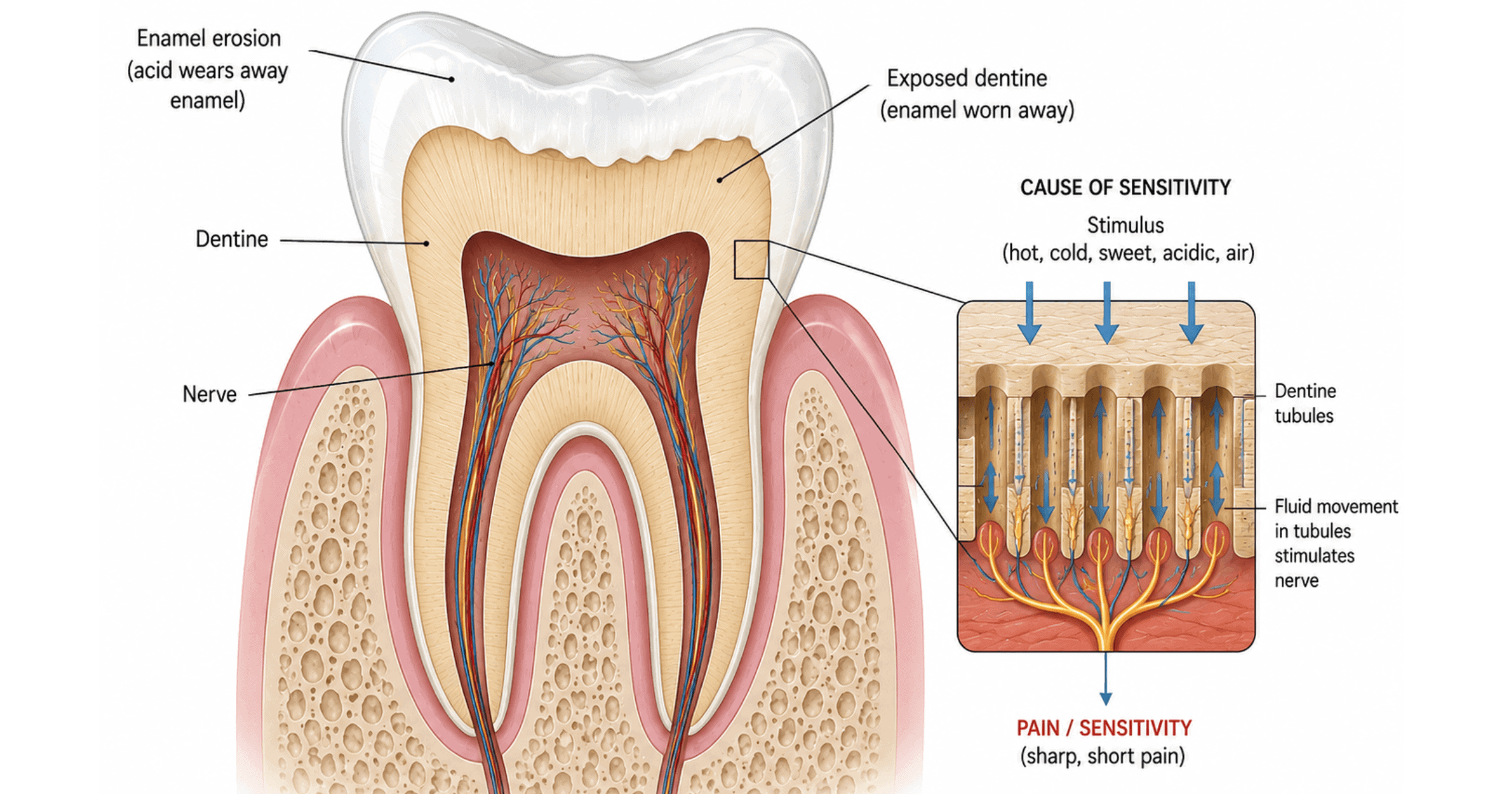
Common Triggers
Once dentine is exposed, a range of everyday things can set off the pain:
- Hot drinks like coffee or tea
- Cold drinks, cold water, or ice cream
- Sweet or acidic food and drinks
- Cold air, particularly when breathing through the mouth
- Brushing, especially with a firm-bristled toothbrush or heavy pressure
- Teeth whitening products
The trigger itself can tell you a lot. Sensitivity to cold that disappears quickly is typically dentine-related. Pain that lingers, arrives spontaneously, or comes on with biting may indicate something more serious — covered in the final section below.
Home Remedies for Sensitive Teeth
For mild to moderate sensitivity, there are several things you can do at home to reduce the discomfort.
Use a desensitising toothpaste
Desensitising toothpastes contain compounds such as potassium nitrate or stannous fluoride that block dentinal tubules or, over time, calm the nerve response. They work gradually — most people notice a difference after two to four weeks of consistent use. For faster results, apply a small amount directly to sensitive areas with a clean finger after brushing.
Switch to a soft-bristled toothbrush
Medium- and firm-bristled brushes can wear down enamel and irritate gum tissue over time. A soft brush, used with gentle circular or vertical strokes, protects both.
Adjust your brushing technique
Brushing too hard is one of the most overlooked causes of sensitivity. Gentle pressure is all you need — you shouldn’t be scrubbing.
Use a fluoride mouth rinse
A daily fluoride rinse used after brushing helps remineralise weakened enamel and offers an extra layer of protection for exposed areas.
Wait before brushing after acidic food or drinks
Acid temporarily softens enamel, and brushing immediately afterwards accelerates wear. Waiting at least 30 minutes — and rinsing with water in the meantime — makes a real difference.
Cut back on acidic food and drinks
Soft drinks, citrus, sports drinks, wine, and vinegar-based foods all contribute to erosion over time. Rinsing with water after consuming them helps limit the contact time.
Professional Treatments for Sensitive Teeth
If home management isn’t providing enough relief — or if your sensitivity is moderate to severe — there are several effective clinical options worth discussing with your dentist.
Fluoride varnish
Applied directly to sensitive areas, fluoride varnish strengthens enamel and blocks exposed tubules. It’s quick, painless, and often provides noticeable relief after a single application.
Dental bonding
A tooth-coloured resin applied to exposed root surfaces or worn areas seals the dentine and protects it from triggers. This is particularly useful where gum recession has left the root exposed.
Gum grafting
Where recession is significant, a gum graft may be recommended. This procedure uses tissue to restore gum coverage and address sensitivity at its source.
Night guard
A custom night guard may be recommended if grinding is involved, helping safeguard your teeth overnight. It won’t reverse existing enamel loss, but it stops the damage from progressing.
Treating underlying decay or cracks
If a cavity or crack is behind the sensitivity, a dental filling, crown, or other restorative treatment addresses the problem directly rather than managing the symptom.
When It’s Something More Serious
Sensitivity that follows a clear pattern — triggered by cold, fades quickly, responds to desensitising toothpaste — is usually manageable and not urgent.
But some signs suggest something more is going on and warrant a prompt dental appointment:
- Sudden onset of sensitivity with no obvious cause
- Pain that continues for more than 30 seconds after the trigger is removed
- Pain when biting or chewing
- Spontaneous, throbbing pain — especially at night
- Tenderness or swelling affecting a tooth or the surrounding gum tissue
- Sensitivity is isolated to one tooth that is progressively worsening
These can indicate nerve involvement, a crack reaching the pulp, or an abscess — none of which respond to toothpaste or home care.
Frequently Asked Questions
Can sensitive teeth go away on their own?
Sometimes. Sensitivity that follows a dental procedure usually resolves within a few weeks. Sensitivity caused by exposed dentine, recession, or erosion won’t resolve without treatment — but it can be managed effectively once the cause is identified.
What’s the best toothpaste for sensitive teeth?
Look for a desensitising toothpaste containing potassium nitrate or stannous fluoride. Your Godon dentist can point you toward a specific product based on the cause of your sensitivity.
Can sensitivity be a sign of a cavity?
Yes. Decay can cause sensitivity to sweet foods, cold temperatures, and pressure. If a sensitive tooth isn’t responding to desensitising toothpaste or is getting worse rather than better, it’s worth having it assessed.
Does teeth whitening cause permanent sensitivity?
Not usually. Sensitivity during or after whitening is common and typically short-lived. If you have pre-existing sensitivity or worn enamel, speak with your Gordon dentist before starting teeth whitening treatment — they can recommend options that are less likely to cause discomfort.
Sensitive Teeth Treatment in Gordon
If tooth sensitivity has been bothering you — whether it’s a mild sting or something sharper that’s affecting your daily routine — our team at Northern Dental Gordon can help identify the cause and recommend the right course of treatment.
We see patients from Gordon, Pymble, Killara, Lindfield, and St Ives, and we take a straightforward approach: find the cause, treat it properly, and help you keep it from coming back.
Call us on (02) 9498 8290 or book online at your convenience. You’ll find us at Suite 3, 2 St Johns Ave, Gordon.